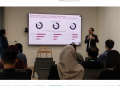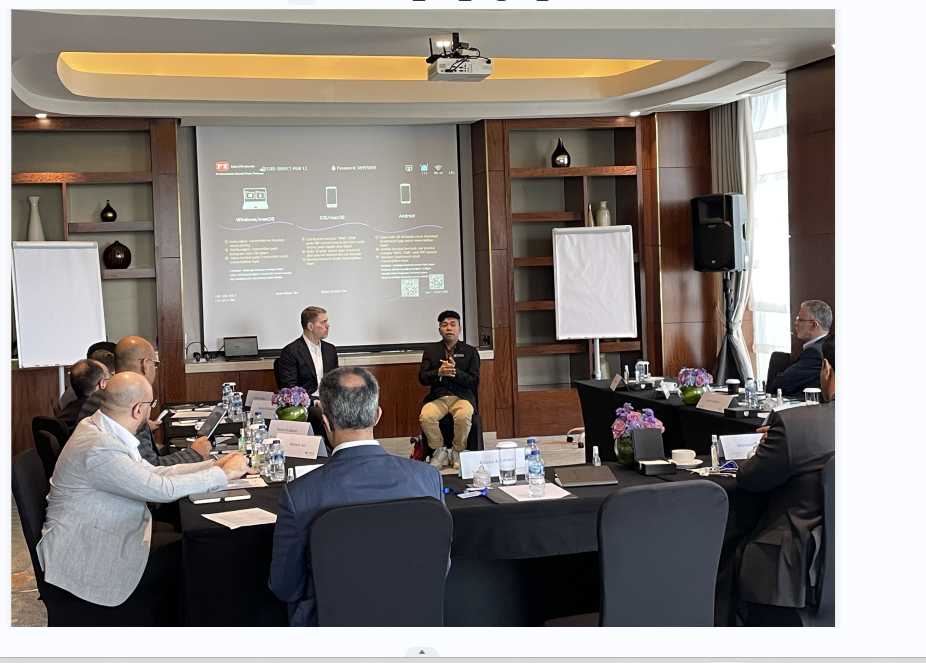

Jakarta, Business Asia – Indonesian economist Billy Mambrasar presented the concept of Prabowonomics as Indonesia’s new national economic development direction to United States investors at an economic forum held at The Ritz-Carlton Jakarta.
In his presentation, Billy explained that Prabowonomics represents Indonesia’s middle-path economic model, where the state safeguards stability, markets remain dynamic, and people are protected. This approach positions a strong state as the foundation of social order, enabling citizens to work with confidence while sustaining economic growth. He noted that amid global uncertainty, Indonesia’s economy still recorded growth above 5 percent in 2025.
Billy, who also serves as an investment advisor for the Batam Free Trade Zone, emphasized reforms in the management of State-Owned Enterprises (SOEs), which are now being directed toward more professional and efficient governance. Through strengthened state asset management, SOE returns are channeled back to public welfare, guided by principles of transparency and accountability.
In the area of human capital development, Prabowonomics begins by investing in people from an early age. The Free Nutritious Meals program, which reached 55.1 million beneficiaries in 2025, the construction of 166 People’s Schools, and the establishment of boarding schools for underprivileged children and high-achieving students serve as concrete examples of the government’s commitment to ensuring a healthy and educated young generation.
On public services, Billy who is also an economic researcher at the ASEAN Competitiveness Study Center at Batam Polytechnic explained that the government continues to simplify regulations and cut bureaucracy to activate village economies, support small businesses, and position the state as a facilitator of growth rather than a barrier to economic activity.
He further stated that the success of Prabowonomics is measured by the upward mobility of lower-income communities. The state plays an active role in protecting and uplifting ordinary people, ensuring basic needs are met and overall living standards improve.
Prabowonomics also emphasizes national self-reliance through strengthening food, energy, and industrial sectors. At the global level, Indonesia maintains a non-aligned foreign policy while remaining open to cooperation in trade and investment.
Billy, who holds a Master of Business Administration degree from the Australian National University, shared that in 2025 Indonesia recorded investment realization of IDR 1,931 trillion, creating employment for 2.71 million people. This demonstrates that well-directed openness can drive economic growth while generating tangible job opportunities.
He also underscored the importance of firm law enforcement and anti-corruption efforts. Throughout 2025, approximately 43 corruption cases were uncovered, including a major crude palm oil (CPO) export facility case that returned IDR 13.2 trillion to the state treasury. This reflects the government’s commitment to placing the rule of law above narrow interests in pursuit of justice and public welfare.
“Prabowonomics is not merely a concept, but a concrete development agenda safeguarding stability, building human capital, simplifying services, protecting ordinary citizens, strengthening national self-reliance, creating jobs, and enforcing the law fairly,” said Billy, who was recently appointed as a member of the Board of Commissioners Committee of PT TASPEN.
The forum formed part of Indonesia’s broader efforts to strengthen international investor confidence, while reaffirming the country’s position as an economy with strong fundamentals and an inclusive long-term development vision.